

AI search positioning
GEO and AEO to build visibility in AI answers. Search access, original content and brand authority, with platform-specific measurement.
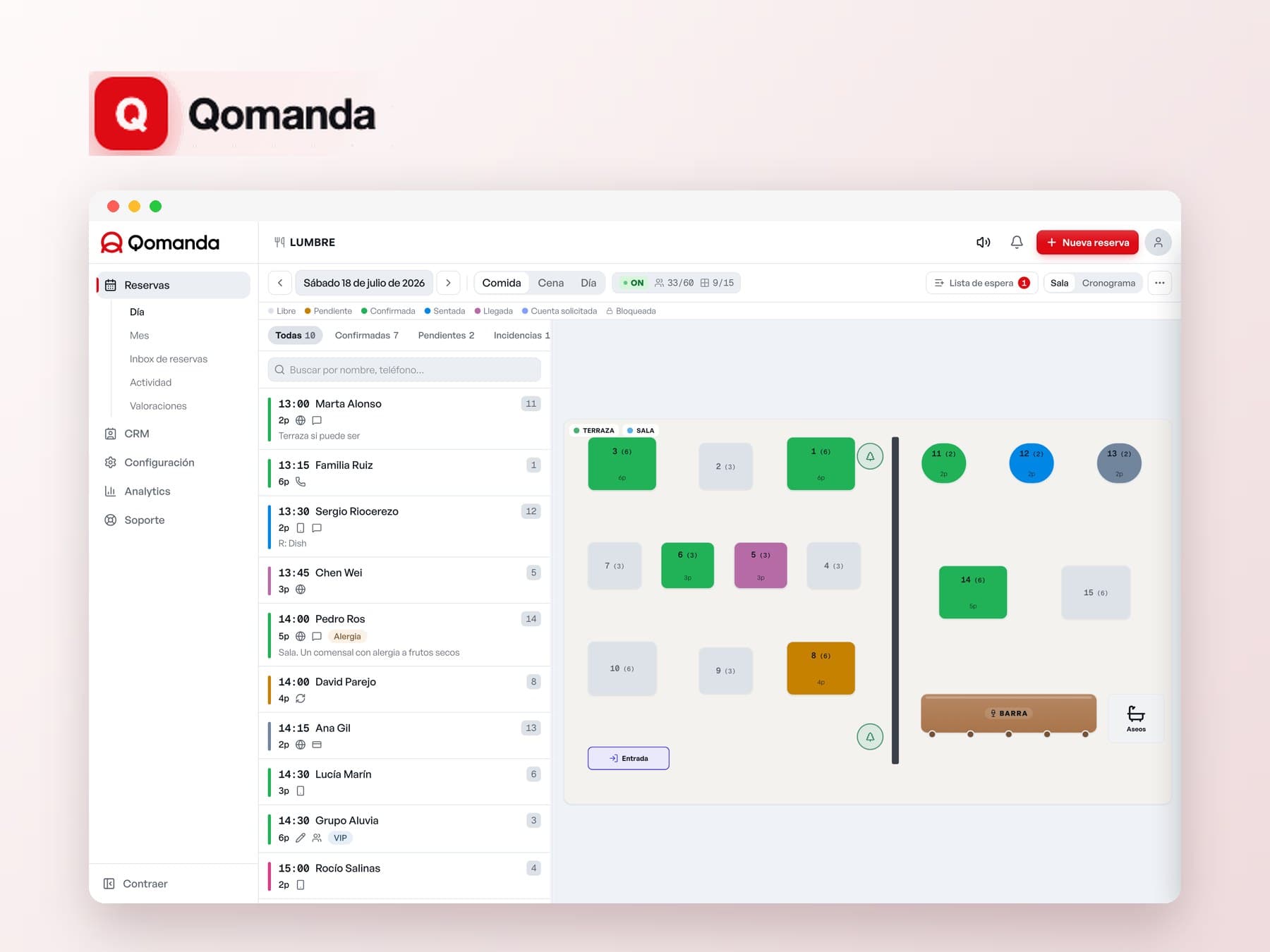
View service: AI search positioningWe build booking, operations and customer applications. Our restaurant product Qomanda shows how we handle tables, shifts and permissions. Your process determines what to integrate and what to build.
What it is
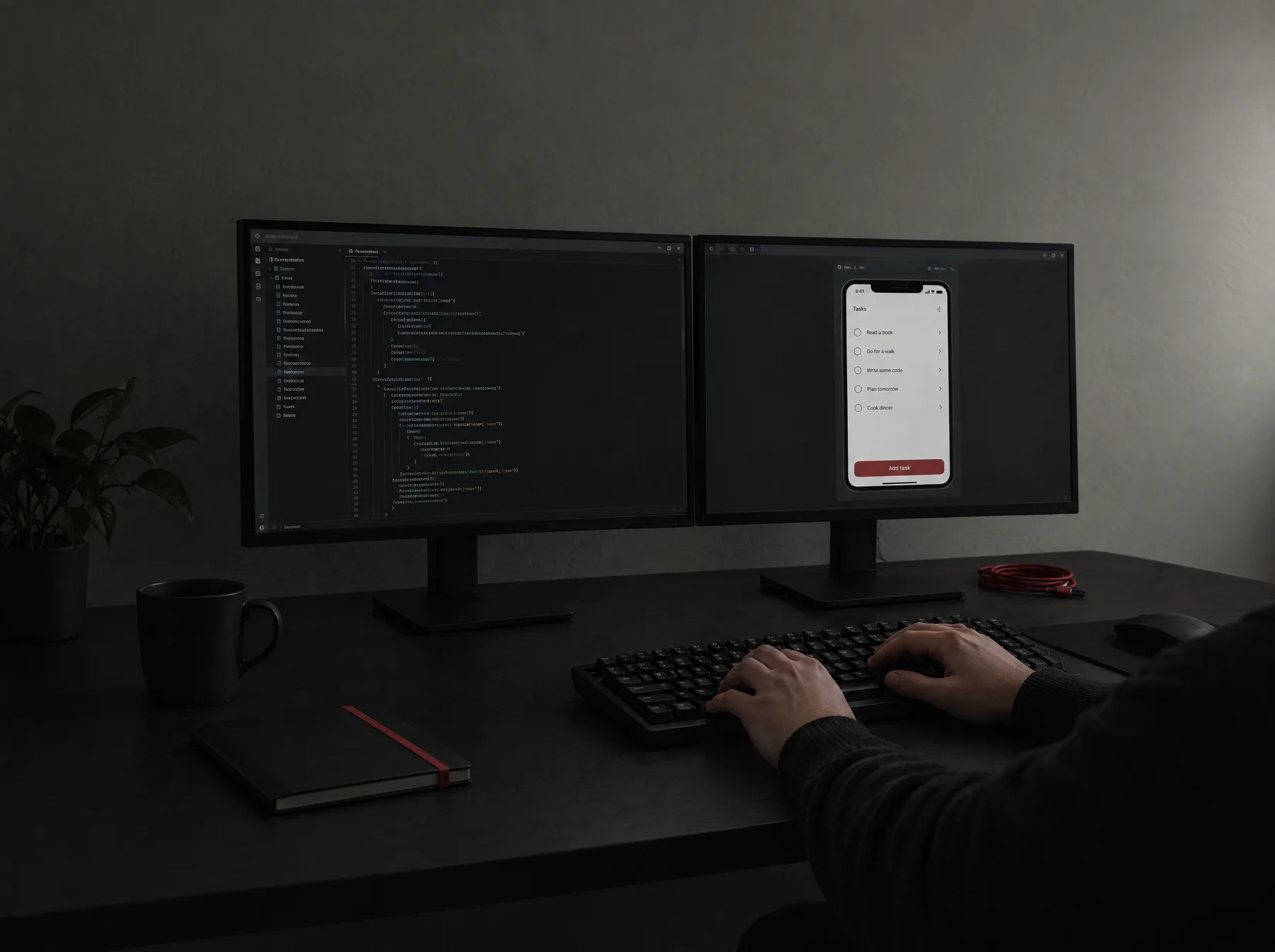
An application brings users, data and tasks into one system. Booking, buying, checking a record or coordinating a team: every action has its place.
Custom development fits when your process outgrows the tools you use. We connect information and reduce the steps currently repeated by hand.
If a website or an existing tool meets your needs, we start there. Custom development makes sense when it adds a useful difference to your operation.
The proof
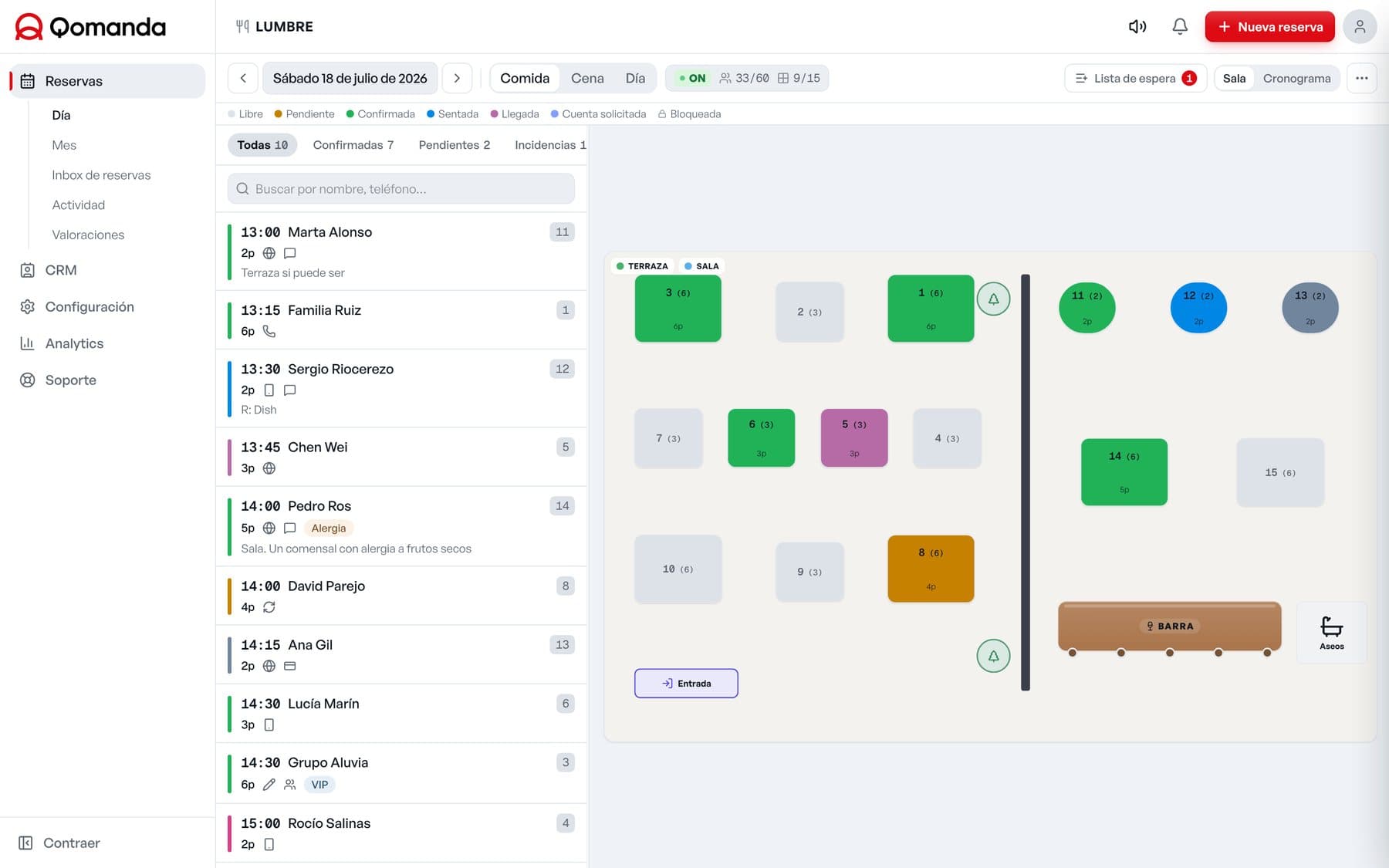
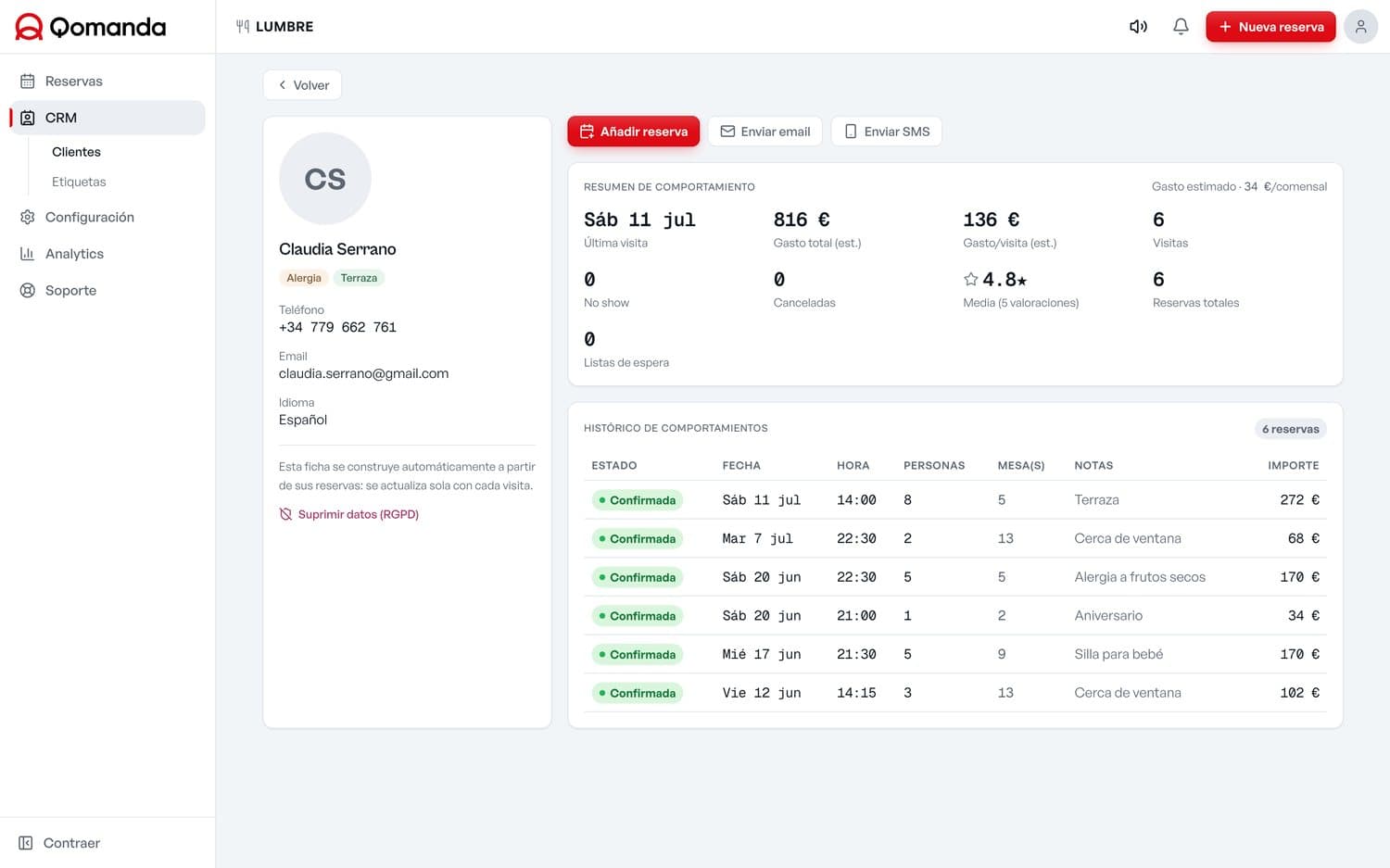
Qomanda is our restaurant booking software, available at app.qomanda.es. We built it and manage its payments, notifications, updates and support.
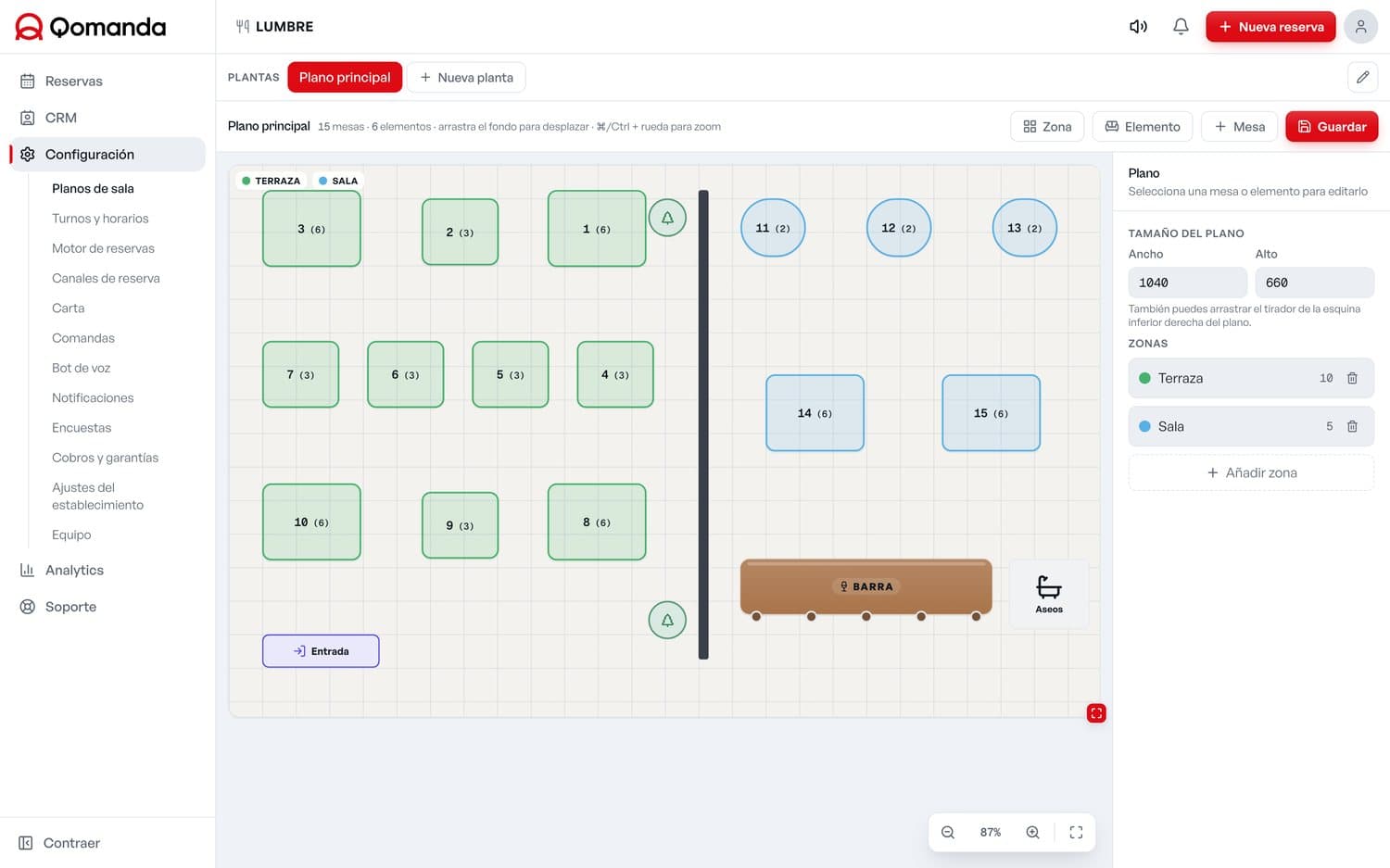
Staff manage bookings, the floor plan, guests and services. Diners book through the restaurant’s website, in its own identity and in twelve automatically detected languages.
The product runs on Next.js, React, TypeScript and Postgres, with Supabase, Vercel and Stripe. It costs €49 per month per restaurant, with no per-diner commission and a thirty-day trial without a card.
You can visit qomanda.es, check the price and try the product before our first meeting.
Product rules
A booking illustrates our approach: check availability, capacity and the table before confirming. If two people request the last slot, the system must resolve it without creating a duplicate booking.
In Qomanda these rules live in the database. For a custom project we similarly define permissions, concurrent operations and failure handling. We agree on behaviour before building the screen.
For your customers
Booking, making an appointment or buying should feel simple from the first use. We design clear journeys with few steps and language your customer understands.
Qomanda’s booking engine fits into the restaurant’s website, adopts its identity and detects twelve languages. The business chooses which information to request; confirmations and reminders go by email.
The customer relationship stays with your business. Their details and history remain part of your own customer database.
For your operation
Work orders, shifts, inventory and traceability. We build screens for real working conditions: standing, moving and making decisions quickly.
In Qomanda, operations change throughout service: bookings, orders and stock. That experience provides a foundation for studying the specific needs of your process.
Qomanda’s operations module connects orders, the touch terminal and a live kitchen display. It includes recipe costing and waste, stock deductions at payment, purchase notes with weighted average prices, consumption reports and cash reconciliation.
Sales documents retain consecutive numbering by series and a chain of signatures. Cash reconciliation preserves the recorded totals, and reprints retrieve the same document.
This module is enabled case by case with assisted setup. Configuration and operation are reviewed before it becomes part of the service.
Engineering
Two people may try to book the last table or sell the last item at the same time. We design the rules to keep information consistent when that happens.
In Qomanda, the database checks capacity, availability and the table before confirming a booking, in one operation. Further checks prevent overlaps when bookings are created or reassigned.
These checks protect the team’s work as activity grows. Bookings, tables and availability keep following the same rules.
Payments
Customer payments go to your own account. We establish that decision at the start of the project.
Qomanda uses Stripe Connect with direct charges. The account belongs to the restaurant and the amount reaches its balance, without Qomanda holding funds.
The restaurant can save a card, hold an amount or charge a deposit. We assess the same type of integration for subscriptions, one-off payments and booking deposits. Processing fees are paid to the payment provider.
Data and permissions
Qomanda separates each restaurant’s information within the database itself. Access rules protect the data across the application.
Five roles —owner, manager, floor, waiter and read-only— define what each person can do. Invitations arrive by email, and support access is logged with a visible notice.
The restaurant can enable guest anonymisation after its chosen retention period. Operational booking, occupancy and billing records are retained.
Qomanda’s servers and functions run in Frankfurt. Booking, customer and invoice exports remain accessible when the subscription ends.
Operating it
An application still needs attention after launch. We monitor automated processes and alerts to detect issues and act on them.
Qomanda has seven automated processes: reminders, end-of-day closing, surveys, a safety net, billing health, data retention and monitoring. The system alerts us if a process stops running.
Server alerts help us identify incidents. We also check that the deployed code and database match the intended version.
Development, monitoring and support for your application are covered by a monthly fee. The same team looks after daily operation and the changes ahead.
Roadmap
In Qomanda, planned features are labelled “Coming soon”. Available features are ready to use.
Every screen reflects the state of the product. The team can work knowing which actions are ready.
In your project, each phase has a defined scope. You see what is delivered and what will be developed next.
Native or web
We choose the format around where the application is used, what it needs to do and who will use it.
A web application can open on mobile, tablet and desktop. As a PWA, it can be installed on the home screen where supported. Qomanda uses this approach for its touch terminal.
We consider native development when you need device features, offline operation or an app-store presence. We compare capabilities, cost and maintenance before deciding.
Types of project
Bookings, appointments and registrations. Availability, shifts, capacity, confirmations and reminders, with a custom engine or the system you already use.
Customer portals and private areas. Orders, documents, records and invoices, accessible according to each user’s permissions.
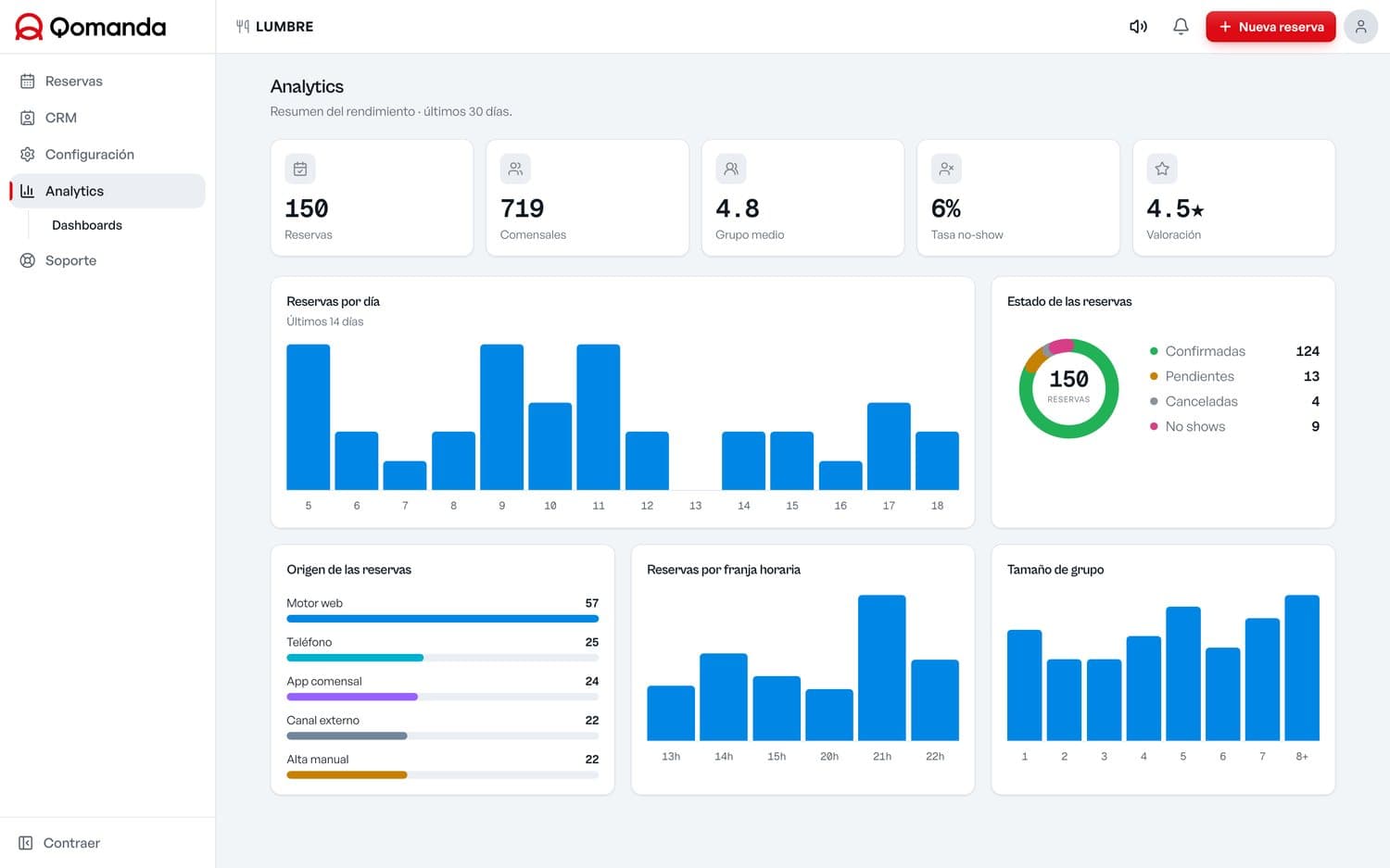
Operations dashboards. Data from different tools brought into one screen to follow activity and make informed decisions.
Touch terminals and field applications. Screens for taking orders, closing work reports or recording warehouse deliveries in real working conditions.
Integrations and automation. We connect ERP, CRM, invoicing, payments and email through their APIs to reduce duplicate tasks.
Your own software product. Applications serving multiple businesses, with subscriptions, customer signup, administration and billing. This is the architecture we built for Qomanda.
First versions and ongoing development. We validate an idea with the essentials or take over an existing application after reviewing what to keep and improve.
How we work
We understand the process, organise the data and build a first version. We test it with the people who will use it and develop it around their experience.
When the application supports a physical operation, we visit it. Seeing who performs each task and under what conditions helps define the software.
We define states before designing screens. A Qomanda booking has fifteen, covering the journey from pending to completed or cancelled. Each reflects a real service situation and the actions available.
We launch the essentials first and observe real use. You approve each phase and help prioritise the next.
Coverage
From Madrid, we work with companies across Spain. You have a dedicated contact and regular reviews.
If the project depends on a dining room, factory or warehouse, we visit at the start. The same team then stays with you through development and operation.
Tell us what you want to achieve. We reply within 24 hours to start shaping it together.










GEO and AEO to build visibility in AI answers. Search access, original content and brand authority, with platform-specific measurement.
View service: AI search positioning
Technical SEO, search intent and local visibility. Build a presence where customers already look for what you sell.
View service: SEO & organic acquisition
A fast website that explains your value and makes action easy. Architecture, code and conversion designed together.
View service: Custom web development
Google Ads and Meta Ads with a clear destination: your business. Campaigns, landing pages and conversion measurement in one team.
View service: Paid media
Applications, booking systems and integrations that remove manual work and connect your business.
View service: Bespoke software
An external team for search, analytics, automation and continuous optimisation. Priorities set by your business data.
View service: Technical digital marketingScope, budget, code ownership and maintenance. The key decisions before starting.
The budget depends on users, features, integrations, languages and operating needs. After a free process audit, you receive a fixed quote and the monthly fee for development and support.
Your company owns the code, design, database and domains, with repository, access and documentation. We use Next.js, React, TypeScript and Postgres to support the project’s continuity.
We decide around how it will be used. A web application can cover mobile, tablet and desktop; a native app may suit device features or an app-store presence. We compare the options before building.
Yes. Qomanda is our restaurant booking software: floor management, a twelve-language booking engine and Stripe payments. It is available at app.qomanda.es, with published pricing and a thirty-day trial without a card.
We review your system’s API and access conditions before agreeing the project. Where integration is supported, we connect the data to avoid duplicate work between applications.
Yes. We integrate Stripe for subscriptions, one-off payments, deposits or booking guarantees. Payments reach your account and gateway fees are paid to the gateway.
We define data isolation, role-based permissions, EU hosting and information retention from the start. Your adviser prepares the legal documentation; we provide the technical details they need.
Yes. We start with a working version of the essentials, test it with users and decide how to expand it around real use.
We define the schedule after understanding the process and scope. We work in phases to put an initial version into use early, with your approval at each delivery.
We can design for offline use if your operation needs it. We define what stays on the device and how changes are synchronised when connectivity returns. That scope is assessed from the start.
Yes. We bring experience with stock, recipe costing, waste, purchase notes, consumption reports and live operations displays. We first visit your operation to define its processes and adapt the development to its needs.
Yes. We audit the code, database and infrastructure to determine what to keep and what to revise. We also check that the live version matches the state of the project.
Support continues with a monthly fee covering development, support and operation. It includes process monitoring, security updates, backups and the agreed product changes.
We are a Madrid company working with businesses across Spain. You have a dedicated contact, regular video calls and in-person meetings when useful.
Let’s put your goals on the table and shape the next step. Book your first conversation with the team.

Tell us what you sell and where you want to grow. We will review your visibility, website and acquisition strategy to define the next step.

Helena Gorlat
Client Success Manager
Search visibility. Technology. Business.
Monday to Friday: 9:00–18:00
Saturday and Sunday: closed