Qomanda
The booking software our restaurants use, we built ourselves: our own product, from the database to the public engine.
The case study where the client is us
A restaurant fills its dining room through its kitchen and its neighbourhood, so the booking has to be its own: its domain, its brand, its guest and a price it can read without calling anybody. That is not something you ask for, it is something you build. Qomanda is ours, and the most demanding client it has is us.

This case study is not like any other on this page. In all the others somebody hires us to do something. In this one, the client is us.
Qomanda is our own software. Alture built it, Alture maintains it and ALTURE DIGITAL, S.L. answers for it. The whole product: database, back-office, public booking engine, payment gateway live and the subscription paywall switched on.
The idea did not come out of a trends report: it came out of the dining room. We have spent years building the websites and running the marketing for restaurants, and from there you see what really decides a service: who owns the guest, who governs capacity, and what the tool costs before you sign anything.
Qomanda answers all three. The guest belongs to the restaurant, capacity is decided by the database and the price is written on the website. That is what it was built for.
A written price and an engine that is yours
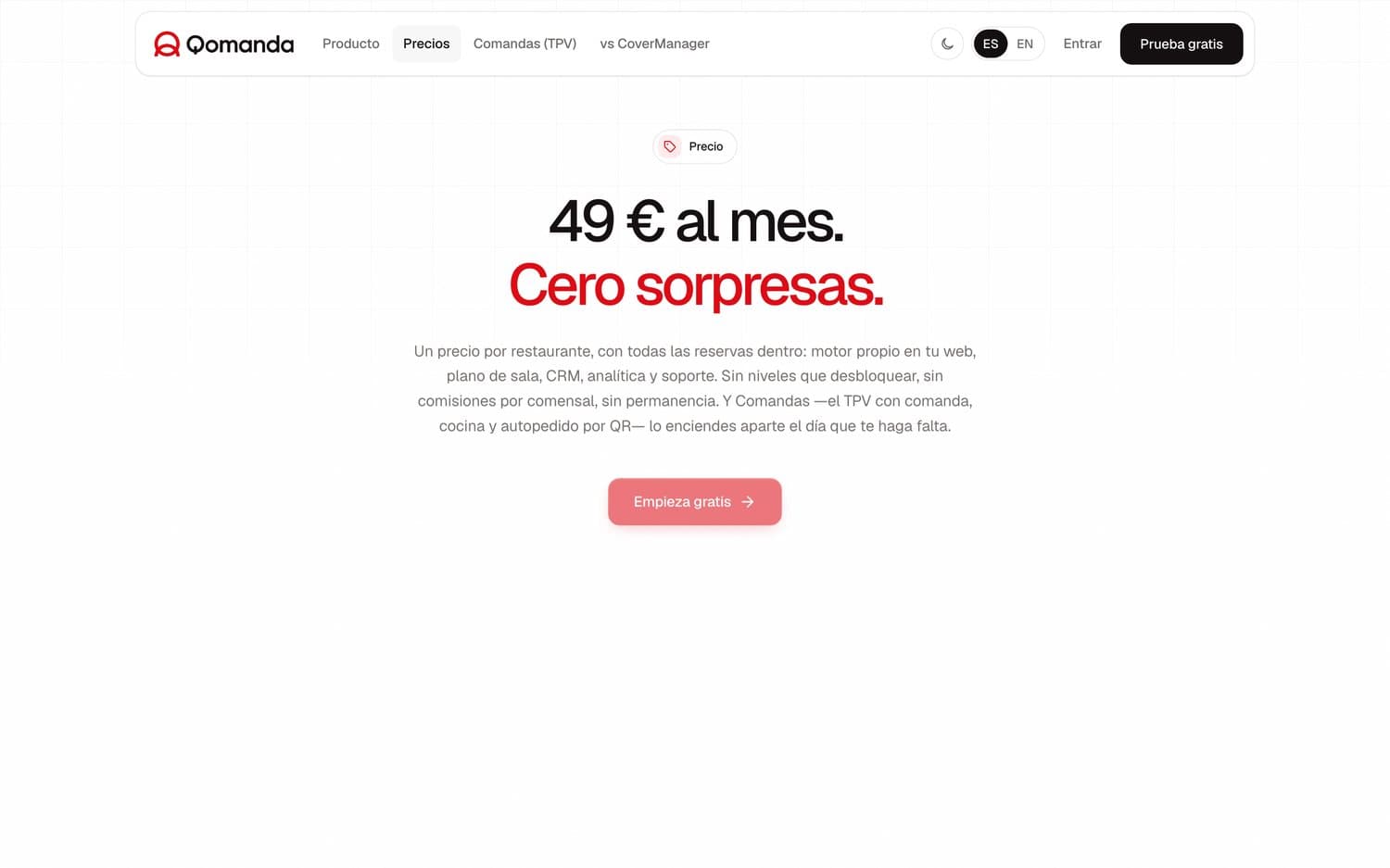
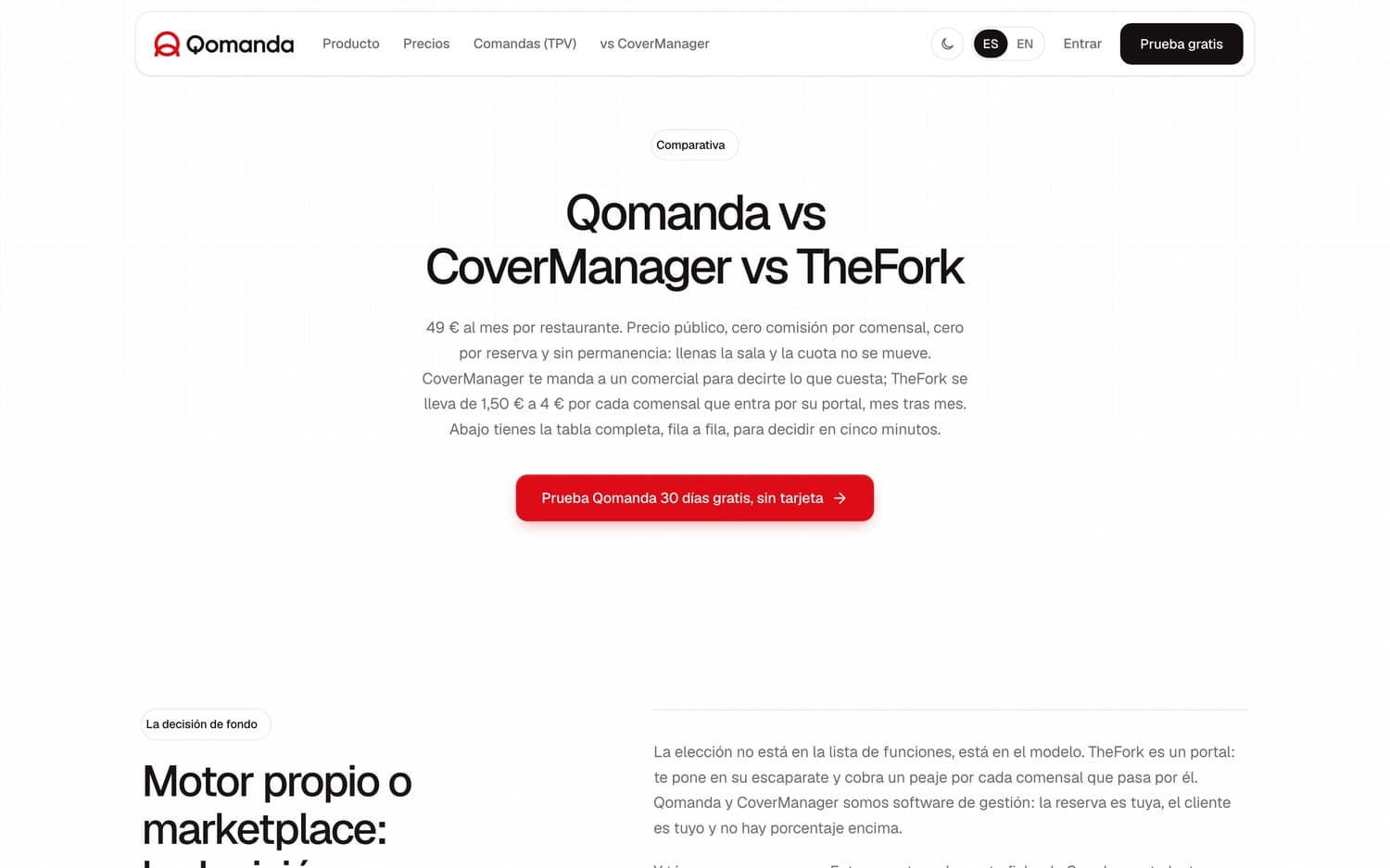
Qomanda does not compete on commission, it competes on clarity: €49 a month per restaurant (plus VAT), in writing. On the home page, on the pricing page and in the comparison. No “request a quote”, no salesperson in between, no lock-in, with a thirty-day trial and no card. A published price is a price that forces the product to be worth it.
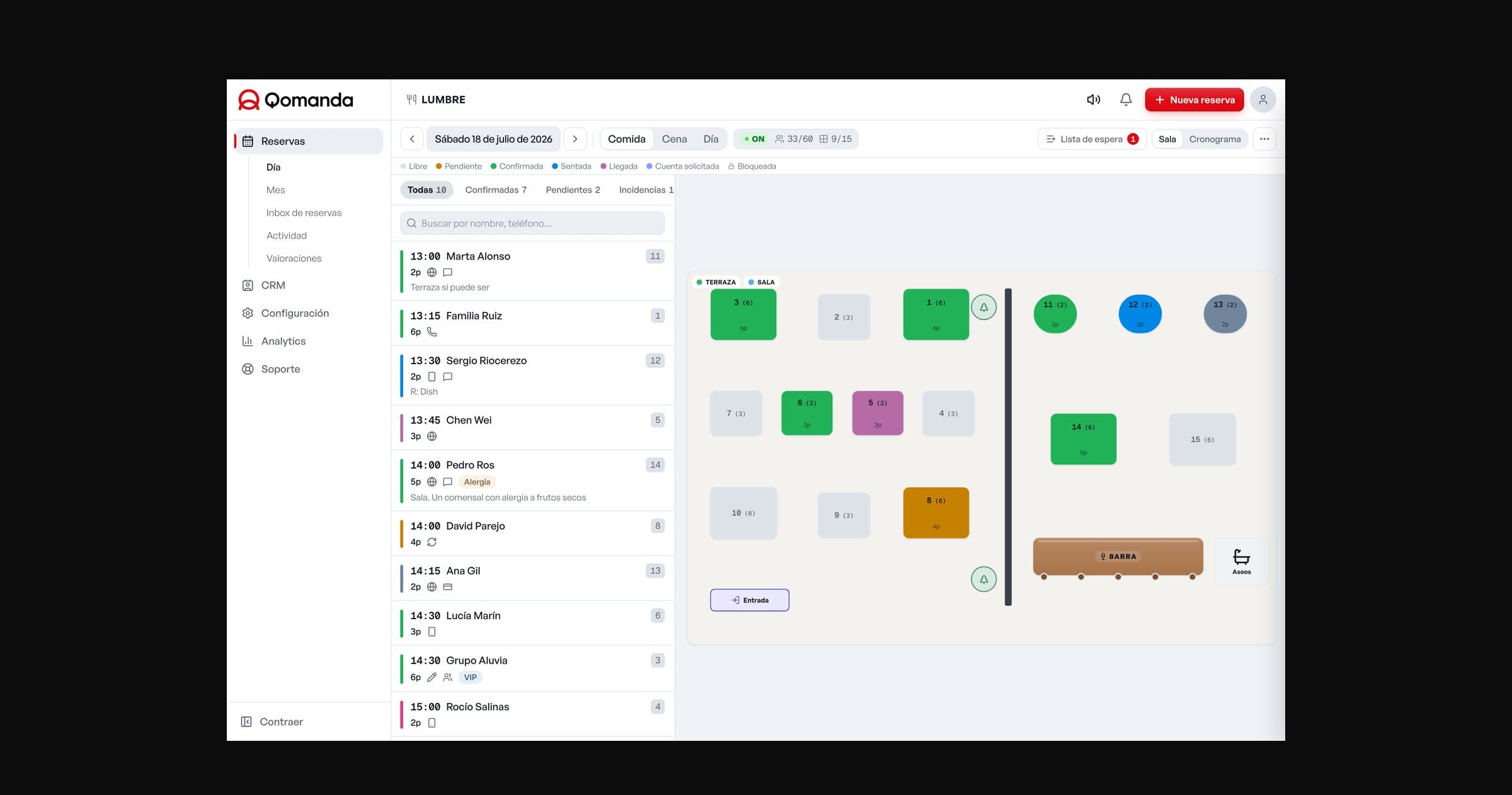
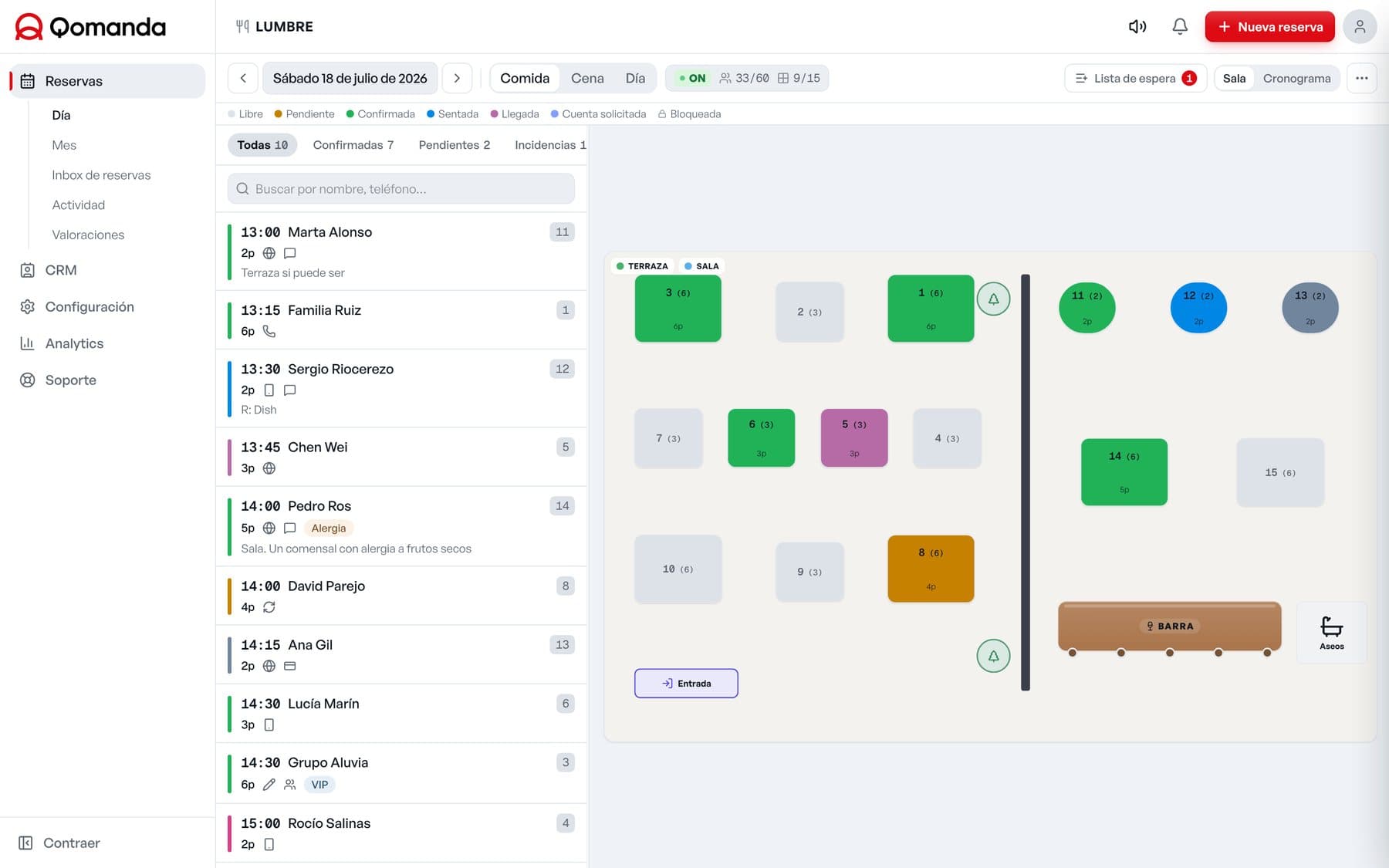
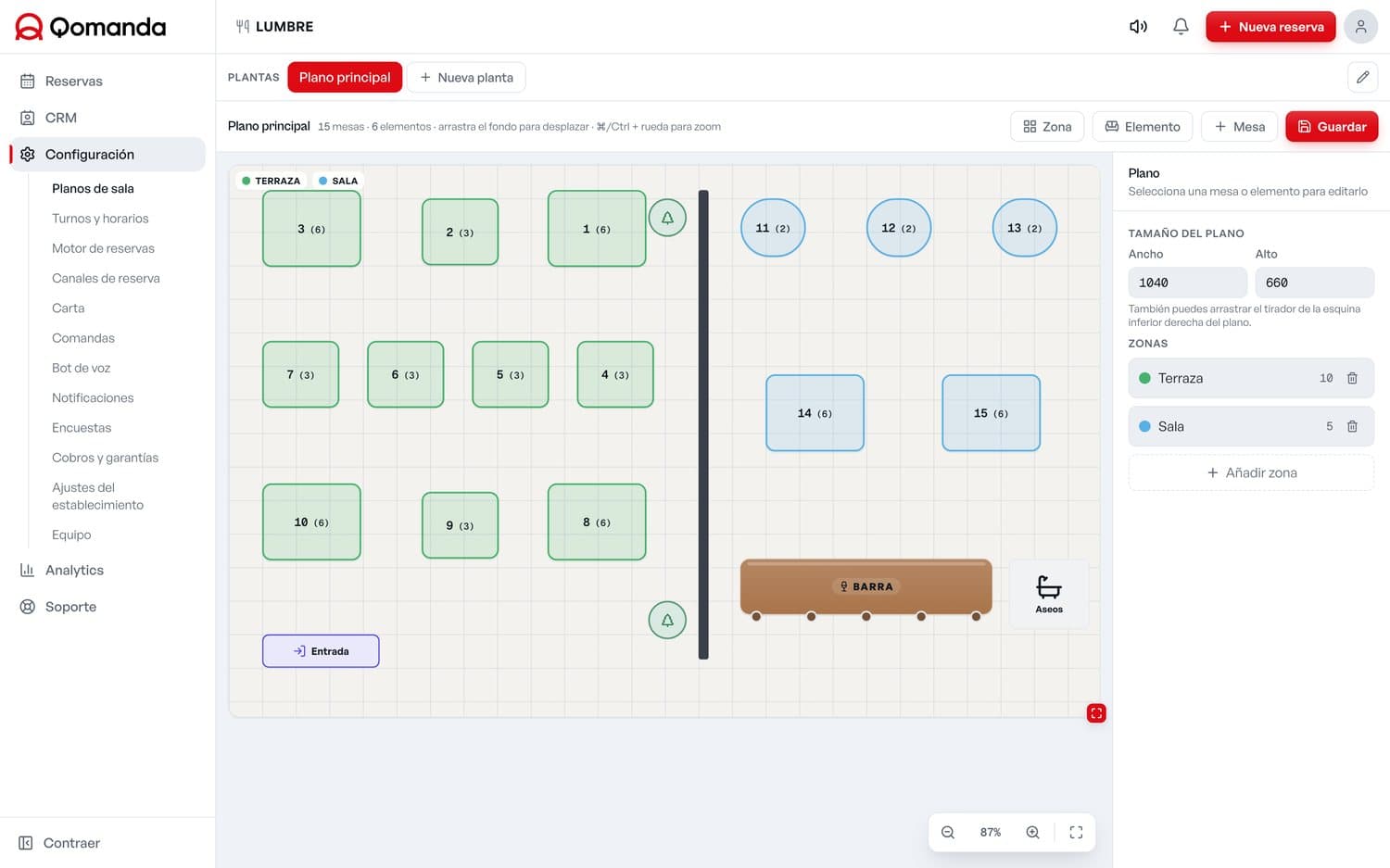
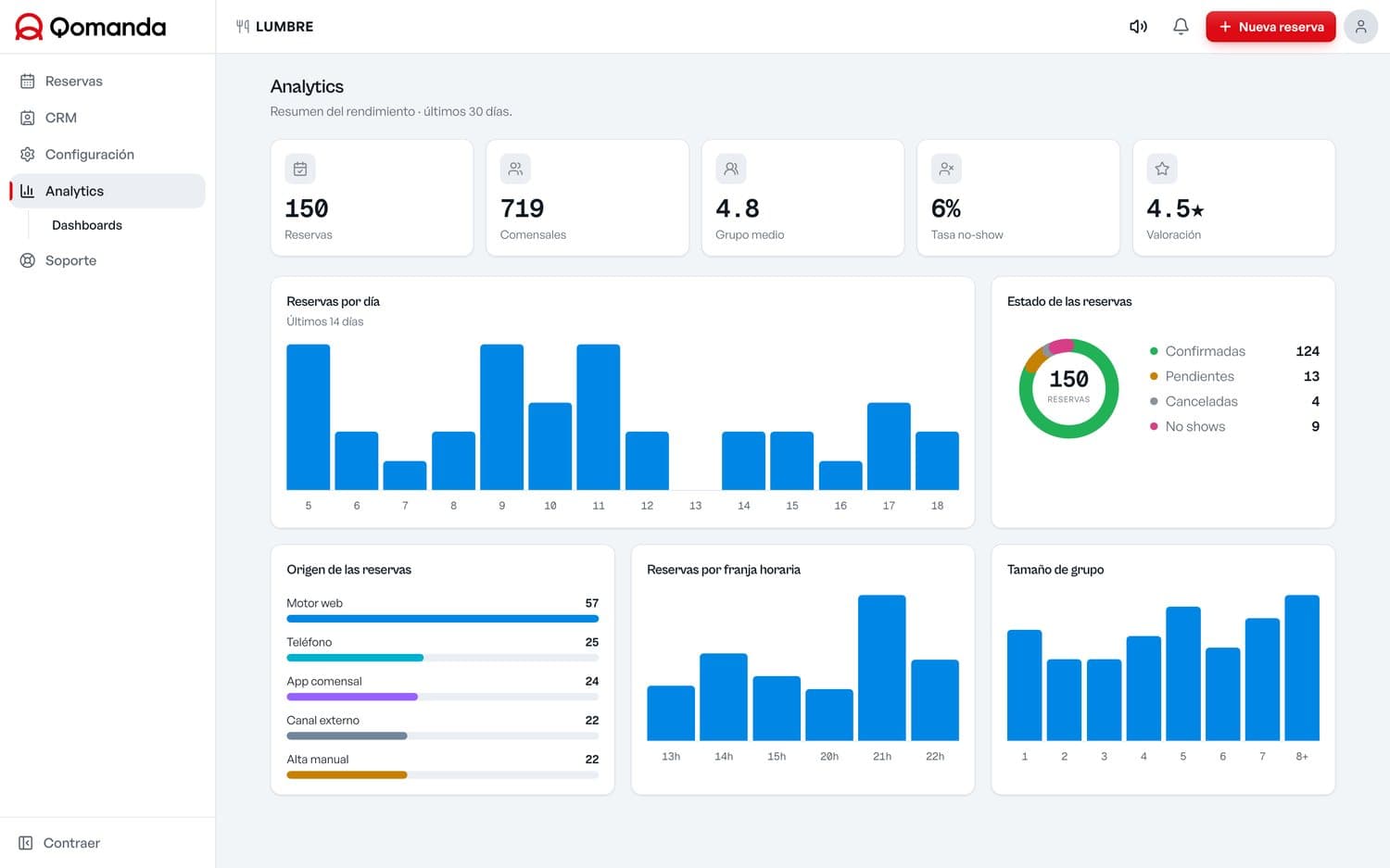
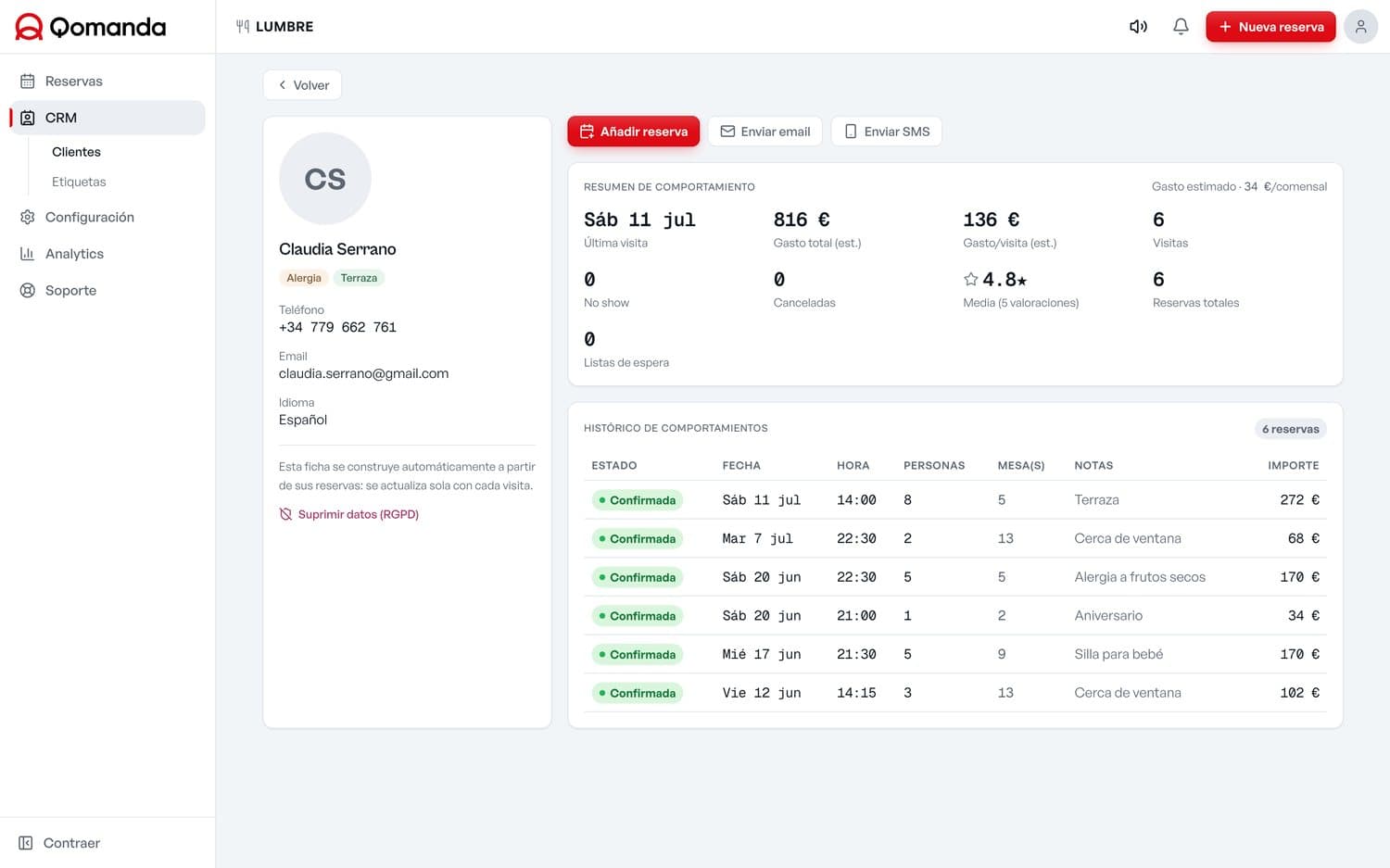
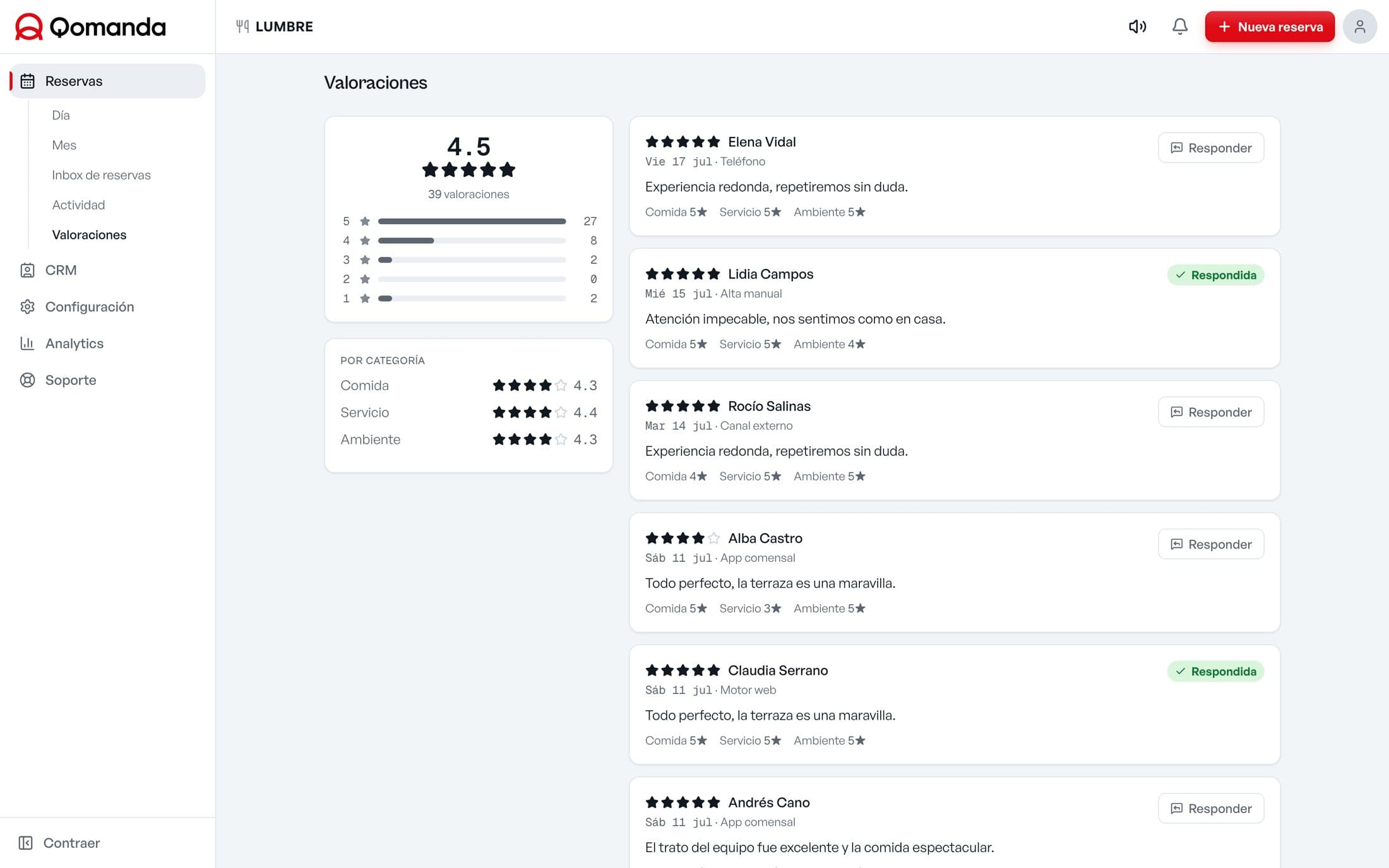
And the guest belongs to the restaurant. The booking engine is embedded in the restaurant's own website with an iframe, in twelve languages with auto-detection: the booking arrives through its domain, with its brand and its colours. Behind it, a back-office for the floor — the Day view, with the service list, the live floor plan and the timeline all looking at the same booking, plus CRM and analytics. All on Next.js 16 and React 19, with Supabase underneath: 42 tables and all 42 with row-level security, so isolation between restaurants does not depend on the application remembering to apply it.
A booking can be in fifteen different states, because a real dining room does not fit into “confirmed” and “cancelled”: there is arrived, arrived at the bar, seated, dessert, bill requested, clearing. And the fourteen EU allergens live on the diner's record, because in a product like this a misread allergy is not a matter of taste.
The marketing website, incidentally, started out dark and ended up migrating to the same light visual language the application already used. The document governing that migration maps every colour by the role it plays — background, border, accent — and not by its shade, so nothing breaks when the family changes. And the screenshots on the website are the real application, not a mock-up.
Bookings is the first piece, not the only one. On top of it we have already built the orders and POS module —QR ordering, kitchen display, recipe costing, stock and chained invoicing— granted case by case: a POS that issues invoices is not something that should switch on by itself, so Alture has to grant the right in the database and the restaurant has to enable it.
That is the direction: a complete front-of-house ecosystem on the same data and under the same panel, instead of four tools from four vendors that do not talk to each other.
The decisions you don't see
Booking software is judged by what it does when nobody is looking.
Capacity is decided by the database, not the application. A single SQL function takes a lock per restaurant and date, checks capacity and table and inserts the booking inside the same transaction, with a trigger on top that rejects any overlap even if the booking arrives by another route. Two guests tapping at the same time cannot take the same slot, and not because the application remembers to check: because the database will not let them.
Deposit money does not pass through us. No-show guarantees run through Stripe Connect with direct charges: the account belongs to the restaurant and the payment lands in its balance. Qomanda never holds funds at any point.
Silence is not success. Every scheduled task stamps a heartbeat and an hourly watchdog raises the alarm if one goes quiet. It matters because reminders that stop going out raise no visible error: they produce no-shows, and you find out about those on Saturday night.
A missed payment does not hold the data hostage. Exports of bookings, customers and invoices sit deliberately outside the paywall, and the public engine keeps accepting bookings for fourteen days after the subscription lapses: a failed charge cannot silently cut off a restaurant's bookings.
The panel is not indexed; the engine is. The marketing website publishes twenty-one routes per language, Spanish and English, each with its own canonical and hreflang, and the comparisons cite their sources with a link and a date. The back-office, by contrast, is blocked entirely from search engines, while each restaurant's booking engine is indexed with its structured data. They are different things and they are treated as such.
And one interface rule that is Alture's before it is Qomanda's: there is not a single green tick in the panel that does not govern something real. Whatever is still on its way is labelled “Coming soon”, and there is a design-system component built only for that.
Building your own product forces something a client brief never forces: living inside your own decisions. When the tool you recommend is yours, you stop designing screens and start designing things that hold up on a Saturday at half nine.
And that is exactly what you get when you commission an app from us: not an agency that has read about multi-tenancy, recurring billing or data isolation, but one running all three in production with its own name on the invoice.


Let’s find your next opportunity.
Tell us what you sell and where you want to grow. We will review your visibility, website and acquisition strategy to define the next step.

Helena Gorlat
Client Success Manager
Search visibility. Technology. Business.
Monday to Friday: 9:00–18:00
Saturday and Sunday: closed